The Forgotten 3DO Blaster Card: A Retro Hardware Restoration Journey
Before the modern gaming giants took over, the early 90s were a Wild West of video game hardware. Among the oddities was the 3DO, a specification rather than a single console. Even stranger, the 3DO standard could be turned into an expansion card for PCs—the 3DO Blaster. This article explores the restoration of one such card by The Retro Collective, uncovering its quirks, repairs, and place in gaming history.
What Was the 3DO Platform and How Did It Differ from Typical Consoles?
The 3DO wasn't a console in the traditional sense—it was a set of hardware specifications created by The 3DO Company. Manufacturers like Panasonic, GoldStar, and Sanyo could build their own 3DO consoles as long as they met the standard. This open approach was revolutionary for its time, aiming to create a unified gaming platform across multiple brands. Unlike the closed ecosystems of Nintendo or Sega, the 3DO allowed competition among hardware makers, theoretically lowering prices and increasing innovation. However, the high cost of early 3DO systems (around $700 in 1993) and strong competition from the PlayStation and N64 limited its success. The platform offered impressive 2D and 3D graphics for its era, but ultimately failed to gain mainstream traction. The 3DO Blaster card brought this same technology to PCs, letting users play 3DO games without buying a separate console.
What Is a 3DO Blaster Card and How Does It Work?
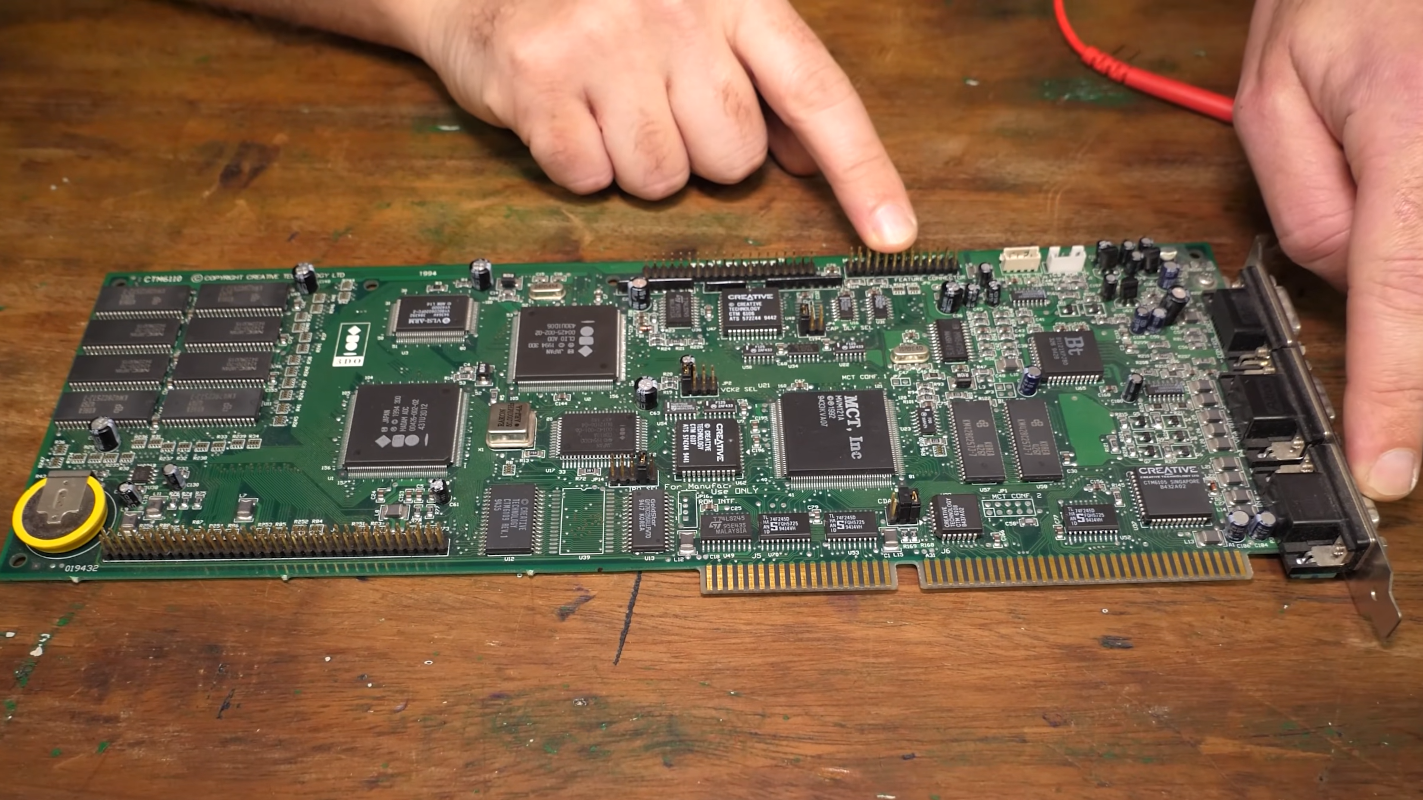
The 3DO Blaster was an ISA expansion card that gave a PC the ability to play 3DO games. Developed by Creative Technology (makers of the Sound Blaster), it essentially turned a compatible computer into a hybrid console-PC. The card contained the core 3DO hardware—the CPU, graphics, and audio chips—allowing direct compatibility with 3DO game discs. To use it, you needed a PC with an ISA slot (typically a 386 or early 486), a Sound Blaster sound card (for audio output), and a CD-ROM drive with a proprietary interface to read the games. The setup was complex by modern standards but showcased a unique approach: instead of buying a dedicated console, you could upgrade your existing PC. The Blaster never became popular due to its high cost (around $399) and the limited library of 3DO titles. It remains a rare collector's item today.
What Issues Did The Retro Collective Encounter with Their 3DO Blaster Card?
When The Retro Collective received a 3DO Blaster for their collection, it wasn't in pristine working condition. After installing it in a period-correct 386 machine, they discovered that the card only functioned properly when physical weight was applied to one corner. This was a clear red flag, indicating a poor electrical connection somewhere on the board. The card would output video and sound incompletely or not at all without that pressure. This problem is common in aging retro hardware where solder joints can crack or connectors loosen over decades. The issue hinted at deeper damage—likely broken traces or detached pins. The team recognized these symptoms from years of experience restoring vintage electronics. They set out to trace the fault systematically, starting with a visual inspection and then using multimeter continuity checks to pinpoint the exact defect.
How Was the 3DO Blaster Card Repaired?
The repair required careful detective work. Under magnification, The Retro Collective found several pins on the PCB that had broken their solder connections—likely due to thermal stress or physical flexing over time. Using a fine soldering iron and flux, they reflowed these joints and added fresh solder to ensure solid contact. They also discovered a couple of nearby traces that were cracked; these were bridged with thin jumper wires. After the physical repairs, they cleaned the card's edge connector with isopropyl alcohol to remove oxidation. Reinstalling the card into the 386, they tested it without added weight—and it worked flawlessly. The machine booted into the 3DO interface, and they could play games like Need for Speed. This straightforward fix underscores how often retro hardware issues are mechanical rather than component failure. The entire process was documented on video, showing each step for fellow enthusiasts.
What Hardware Was Required to Use a 3DO Blaster Card in a PC?
To run a 3DO Blaster, your PC had to meet specific—and by today's standards, archaic—requirements. First, you needed a 32-bit ISA slot, found in 386 and early 486 systems. A Sound Blaster card (or compatible) was mandatory for audio, since the Blaster card handled video and game logic but not sound output. The CD-ROM drive had to use a proprietary Panasonic-like interface (often Creative's own model) because the Blaster expected a specific data bus. You also needed enough RAM and a VGA monitor. The whole setup could be finicky: driver conflicts and IRQ settings were common headaches. Once configured, the system behaved like a 3DO console, booting directly into the game disc. The Blaster's price tag—around $400—was comparable to a standalone console, but you already needed a PC worth thousands. This limited its appeal to enthusiasts willing to invest in the dual functionality. The card never gained mainstream acceptance, fading quickly after the 3DO's market collapse.
How Did the 3DO Compare to Other Consoles of Its Time?
The 3DO, in both console and Blaster form, was positioned as a competitor to the Sony PlayStation and Nintendo 64. In raw specs, the 3DO's CPU (a 32-bit RISC ARM architecture) and custom graphics chips offered comparable polygon performance and better CD-quality audio than many contemporaries. However, its lack of texture filtering and limited fill rate meant games often looked less polished than PlayStation titles. The library of 3DO games included notable titles like Crash 'n Burn and Way of the Warrior, but it never matched the breadth of Nintendo or Sony. The system's high price and delayed release (1993, before the 3D console boom) hurt its competitiveness. In retrospect, the 3DO's architecture was innovative—it even supported early online play via modem—but execution and market timing prevented it from dethroning the giants. The Blaster card version was arguably even more niche, offering a pioneering but impractical way to merge PC and console gaming.
What Does the 3DO Story Tell Us About the History of Gaming Hardware?
The 3DO Blaster card represents a fascinating fork in the road for gaming. It showed that console-quality gaming could be integrated into PCs via expansion cards, a concept that anticipates modern HDMI capture cards and emulation boxes. Had it succeeded, we might have seen more cross-platform standards where PC upgrades replaced dedicated consoles. But the Blaster's failure—due to cost, complexity, and limited software—reinforced the traditional split between PC and console gaming. The restoration story also highlights the fragility of early 90s hardware and the dedication of retro enthusiasts. Every cracked pin and oxidized connector tells a tale of how rapidly technology becomes obsolete. For collectors, preserving these artifacts is crucial to understanding the evolution of interactive entertainment. The 3DO Blaster may be forgotten by the mainstream, but it remains a testament to a time when the boundaries between PC and console were being actively redrawn.