How Spotify Engineered a Multi-Agent System for Smarter Advertising
Introduction: Beyond the AI Buzzword
When the engineering team at Spotify set out to improve their advertising platform, they didn't simply aim to bolt on another "AI feature." Instead, they identified a fundamental structural problem in how their ad delivery system operated. The result was a multi-agent architecture that reframes the role of artificial intelligence in digital advertising—not as a monolithic black box, but as a coordinated team of specialized agents.
The Structural Problem
Traditional ad platforms rely on a single model to handle everything from user profiling to ad selection to bidding. This monolithic approach creates bottlenecks: a model trained on user behavior may not understand ad inventory constraints, and a model optimized for bid price often ignores relevance. Spotify's system was performing well on average, but failing to adapt to edge cases or dynamic changes in listener behavior.
What Is a Multi-Agent Architecture?
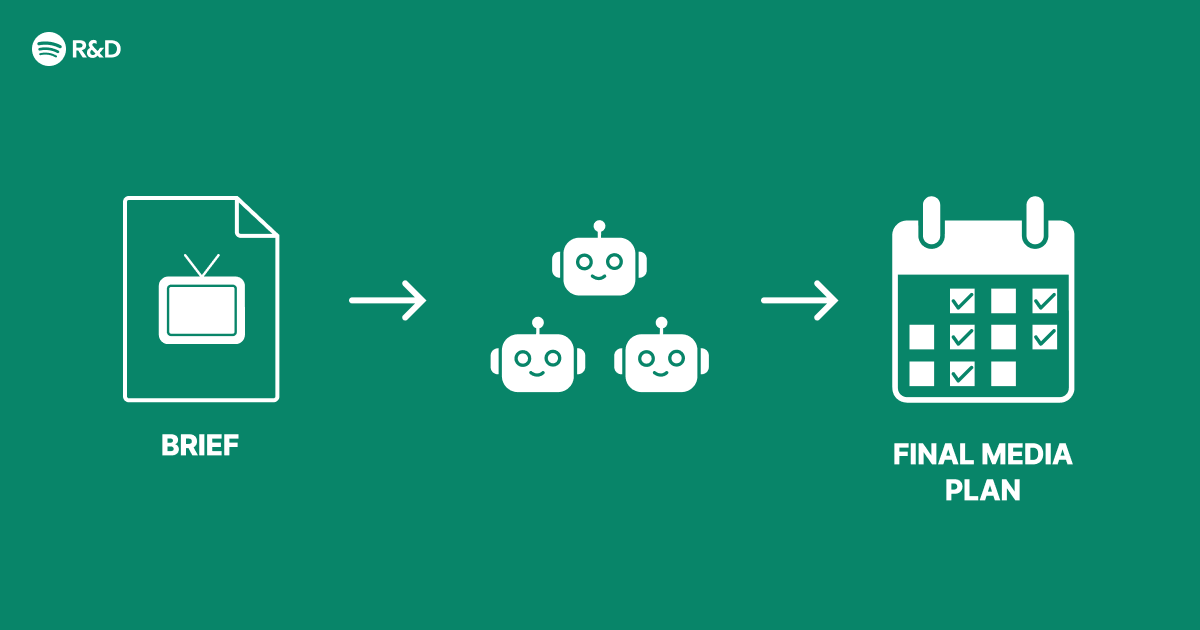
Instead of one model doing all the work, Spotify created several specialized AI agents, each responsible for a distinct part of the advertising pipeline. These agents communicate and negotiate with one another, much like a team of human experts collaborating to achieve a common goal.
Agent Types
- Audience Agent: Analyzes user context—listening history, device, time of day, mood indicators—to infer interest signals.
- Inventory Agent: Manages available ad slots, their format (audio, video, display), and price floors.
- Bidding Agent: Decides how much to bid in real-time auctions, balancing cost vs. value.
- Creative Agent: Selects or adapts ad creatives (audio clips, images) to match the user context and agent recommendations.
How the Agents Coordinate
The agents operate in a shared context window, passing messages about their current state and constraints. For example, the Audience Agent might flag a user as currently in a "high-focus" state (e.g., listening to a podcast). It informs the Creative Agent, who then recommends a shorter, less intrusive ad. The Bidding Agent sees that this user has a high value score and can increase the bid accordingly, while the Inventory Agent checks if a premium slot is available.
This coordination is managed by a lightweight orchestration layer that ensures all agents operate within latency budgets (under 100 milliseconds for real-time auctions). The system uses a publish-subscribe pattern: agents subscribe to updates relevant to their function and publish findings that others may need.
Training and Optimization
Each agent is trained using reinforcement learning on historical ad delivery data, but with a twist: the reward function is shared across agents. An ad delivery that leads to a high click-through rate and positive user sentiment (measured via skip rates) rewards all agents involved. This incentivizes cooperation rather than local optimization.
Spotify also uses a simulation environment (see Simulation and Testing) where agents can train offline against historical and synthetic scenarios. This allows rapid iteration without risking real user experience.
Simulation and Testing
Before deploying a new agent or policy, Spotify runs thousands of simulated ad auctions. The simulator models user behavior, advertiser budgets, and market dynamics. Agents are tested for both average performance and long-tail edge cases—like a user with a very unusual listening pattern or a sudden spike in demand during a live event.
This approach caught several failure modes that would have been costly in production. For example, early versions of the Bidding Agent would overbid on a small subset of users, depleting advertiser budgets too quickly. The simulation revealed this and allowed the team to add a budget pacing constraint.

Results and Impact
The multi-agent architecture delivered significant improvements:
- User relevance improved by 12% (measured by lower ad skip rates and higher completion rates).
- Advertiser ROI increased by 8%, as ad spend was more efficiently allocated.
- System flexibility allowed the team to introduce new capabilities (e.g., dynamic creative optimization) by simply adding a new agent and connecting it to the existing coordination layer.
Importantly, the architecture also improved explainability. Because each agent has a clear role, Spotify's analytics team can trace a specific ad decision back to which agent contributed what signal—something that was nearly impossible with the previous monolithic model.
Lessons Learned
Spotify's engineering team shared several insights from building this system:
- Start with the problem, not the technology. The multi-agent approach emerged from a need to fix structural inefficiencies, not from a desire to use a trendy AI paradigm.
- Latency is everything. Real-time ad auctions demand decisions in milliseconds, so agents must communicate efficiently. Spotify built a custom lightweight message bus to avoid overhead from off-the-shelf frameworks.
- Reward design matters. Shared rewards encourage cooperation, but must be carefully calibrated to avoid agents gaming the system (e.g., ignoring user experience to maximize short-term revenue).
- Simulation is a superpower. Offline testing catches a huge number of issues before they reach production. Spotify invested heavily in creating a realistic ad marketplace simulator.
Future Directions
Spotify is exploring two main extensions to this architecture. First, they are adding a privacy agent that enforces data usage policies in real-time, ensuring compliance with regulations like GDPR and CCPA without manual oversight. Second, they are experimenting with meta-learning where a supervisory agent adjusts the learning rates and reward weights of the other agents based on overall system performance—essentially an agent that optimizes the other agents.
For more details, Spotify Engineering has published several deep dives into specific components of this system. The multi-agent approach represents a shift away from monolithic AI towards more modular, interpretable, and robust architectures—a trend that is likely to shape the future of ad tech across the industry.